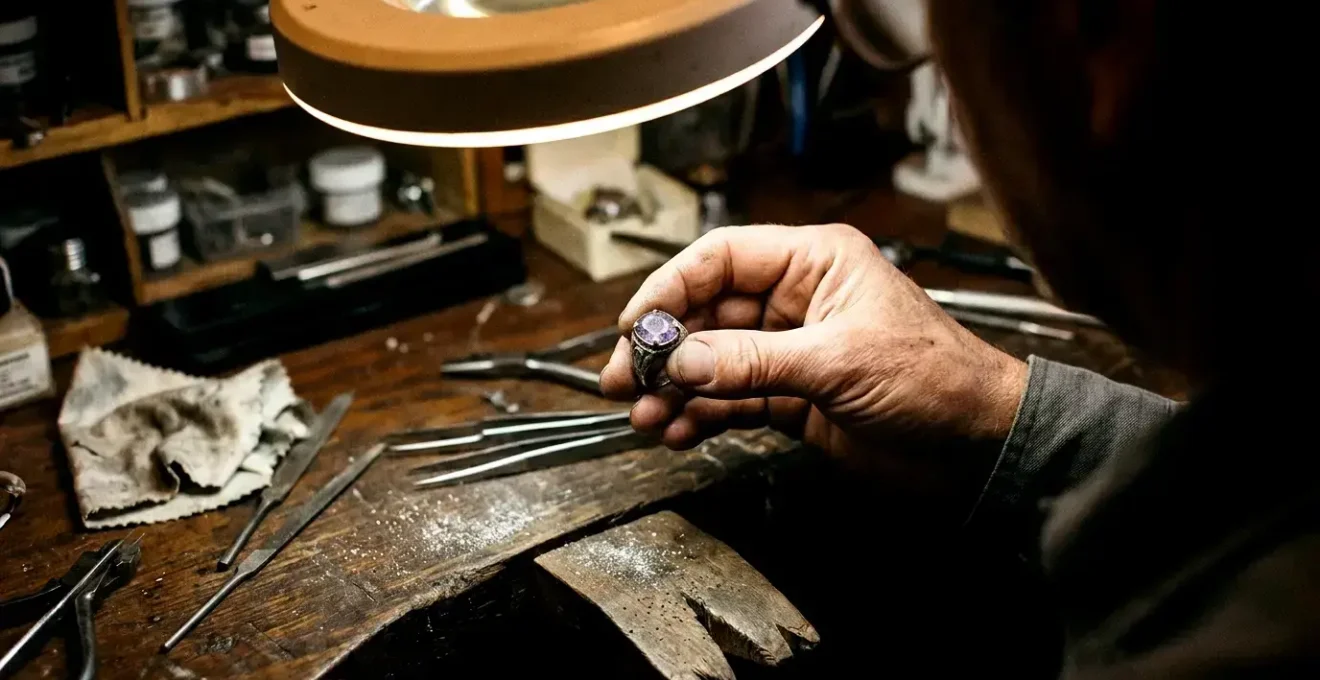
A gemstone ring can look flawless in the showroom and noticeably tired after months of commuting, typing, carrying bags and reaching into cupboards. The problem is rarely that someone bought a supposedly inferior stone. More often, the stone, setting and wearing habits were never matched.
For jewellery worn five days a week, spinel is one of the strongest practical choices among commonly marketed semi-precious coloured gemstones. Certain garnets also perform well with sensible protection. Amethyst can be beautiful in a regularly worn ring, but it demands greater attention to abrasion, exposure and setting design.
The label “semi-precious” tells you almost nothing about durability. What matters is whether a gemstone resists scratches, survives impacts and remains stable around the conditions it encounters. A low-profile setting can be just as important as the mineral itself.
Choosing well means being realistic about what your hands do every day, how much maintenance you will tolerate and which compromises in colour, size or price are acceptable.
Everyday gemstone rings: the practical verdict
- Choose for durability, not labels: hardness, toughness and environmental stability all matter.
- Prioritise spinel for demanding routines: its Mohs hardness of 8 and good toughness make it a strong candidate, especially in a protective setting.
- Protect before repairing: avoid unnecessary chemical exposure, inspect claws regularly and choose a stone that does not protrude excessively.
- Why Does Your Everyday Ring Get Scratched in 2 Weeks Even If the Stone Feels Hard?
- How to Choose a Semi-Precious Stone for Daily Wear Using a 3-Constraint Checklist?
- Spinel vs Garnet: Which Is the Better Choice for a Ring You’ll Wear 300+ Days a Year?
- The Cleaning Mistake That Ruins Porous Gemstones in Under 24 Hours
- When Should You Re-Polish or Re-Tip Claws to Prevent Losing a Semi-Precious Stone?
- The Everyday-Wear Mistake That Makes Amethyst Look Worn Out in 6 Months
- Smaller Clean Stone vs Larger Included Stone: Which Is Safer for a Ring You Won’t Baby?
- Which Amethyst Should You Choose If You Want Strong Purple Without It Looking Brown Indoors?
Why Does Your Everyday Ring Get Scratched in 2 Weeks Even If the Stone Feels Hard?
A hard gemstone can still look scratched or chipped because hardness measures resistance to abrasion, not resistance to breaking. Everyday impacts, exposed facet edges and contact with abrasive particles can damage a ring without one dramatic accident. Two weeks is possible under demanding conditions, but it is not a predictable wear period for any gemstone.
The distinction matters because gemstone durability has three separate components. Hardness describes resistance to scratching. Toughness describes resistance to fractures and chips. Stability describes how the material responds to light, temperature, moisture and chemicals.
The GIA’s explanation of gemstone durability beyond the Mohs scale makes clear why a stone can score highly for hardness yet remain vulnerable to impact damage.
Consider a ring worn while working at a desk. Its stone might strike a metal drawer handle, scrape against a gritty surface or catch on a door frame. At the gym, weights and equipment introduce harder impacts. During cleaning, chemicals and accidental knocks add different risks.
These exposures do not produce identical damage. A concentrated impact can chip a vulnerable edge. Abrasive contact may gradually round facet junctions or reduce surface brilliance. Dirt, soap and skin oils can also make an undamaged gemstone look dull, so cleaning should precede any assumption that polishing is necessary.
Quartz-containing dust is particularly relevant to stones with hardness near that of quartz. However, a scratch appearing after ordinary use does not prove that dust caused it; the gemstone, contact material and setting need examination.
To assess your exposure, observe which hand you use for carrying objects, opening doors and handling equipment. Then inspect whether the ring sits above the finger or is sheltered by surrounding metal.
If a gemstone repeatedly loses its polish, changing the setting or removing the ring for abrasive tasks may accomplish more than choosing another stone with a slightly higher hardness rating.
How to Choose a Semi-Precious Stone for Daily Wear Using a 3-Constraint Checklist?
Choose an everyday gemstone by checking three constraints: the stone’s combined durability, the physical demands of your routine and the maintenance you will realistically perform. A suitable stone must satisfy all three. High hardness cannot compensate for a vulnerable setting, and excellent toughness cannot prevent every scratch or chemical reaction.
The first constraint is material durability. Look beyond the Mohs number to toughness, environmental stability, treatments and visible fractures. A stone with good scratch resistance but poor resistance to blows may disappoint in an exposed ring.
The second is lifestyle exposure. The following categories are practical shopping guides, not scientifically validated wear ratings.
| Hand-use level | Typical exposure | Practical selection |
|---|---|---|
| Light | Mostly desk work with limited physical contact | Amethyst or garnet may work with sensible care and protection |
| Moderate | Commuting, carrying bags, frequent household tasks | Prioritise spinel or a suitably selected garnet in a low setting |
| Heavy | Manual work, frequent knocks, abrasive equipment | Choose a durable stone and protective design, but remove the ring for hazardous activities |
The third constraint is maintenance tolerance. Someone happy to remove a ring before cleaning, exercise and manual tasks can consider more delicate options. Someone who regularly forgets should prioritise a durable stone and secure, low-profile construction.
The term “semi-precious” is not a scientific performance classification. It groups together gemstones with very different physical properties. Conversely, even a traditionally precious gemstone may chip if its structure and exposure make it vulnerable.
Budget introduces another compromise. A smaller, well-cut, durable gemstone may be preferable to a larger stone whose exposed edges or internal fractures create more opportunities for damage. Colour saturation, size and clarity should be weighed against everyday practicality rather than maximised independently.
Your five-step everyday gemstone buying checklist
- Record your hand-use level: write down whether your typical week involves light, moderate or heavy physical exposure.
- Shortlist suitable stones: create a two- or three-stone comparison noting hardness, toughness and stability.
- Inspect the setting: photograph or note its height, exposed corners and available metal protection.
- Confirm treatments: request written disclosure of any dyeing, filling or other relevant enhancement.
- Define your care routine: write a realistic cleaning, removal and inspection plan before purchasing.
Once your routine and maintenance limits are clear, comparing specific stones becomes much easier. Spinel and garnet provide a useful example of how physical properties translate into practical choices.
Spinel vs Garnet: Which Is the Better Choice for a Ring You’ll Wear 300+ Days a Year?
Spinel is generally the stronger default for a ring worn more than 300 days a year because it combines Mohs hardness 8 with good toughness. Garnet can also perform well, but its hardness and toughness vary by variety. A protective setting and sensible removal habits remain important for both, particularly for active wearers.
Spinel has an advantage in scratch resistance over the garnet group. Garnets range from 6.5 to 7.5 on the Mohs scale, while spinel ranks at 8 Mohs. This does not establish an exact difference in lifespan: the Mohs scale is ordinal, and long-term wear also depends on impacts and design.
The GIA’s spinel care and cleaning reference describes spinel as having good toughness and suitability for jewellery. Spinel is generally stable under ordinary light and chemical exposure, although high heat and certain treatments require caution.
Garnet is not one uniform material. Almandine, pyrope, spessartine and tsavorite are among the harder varieties, while demantoid is relatively softer. This makes the identity of the garnet an important part of any buying decision.
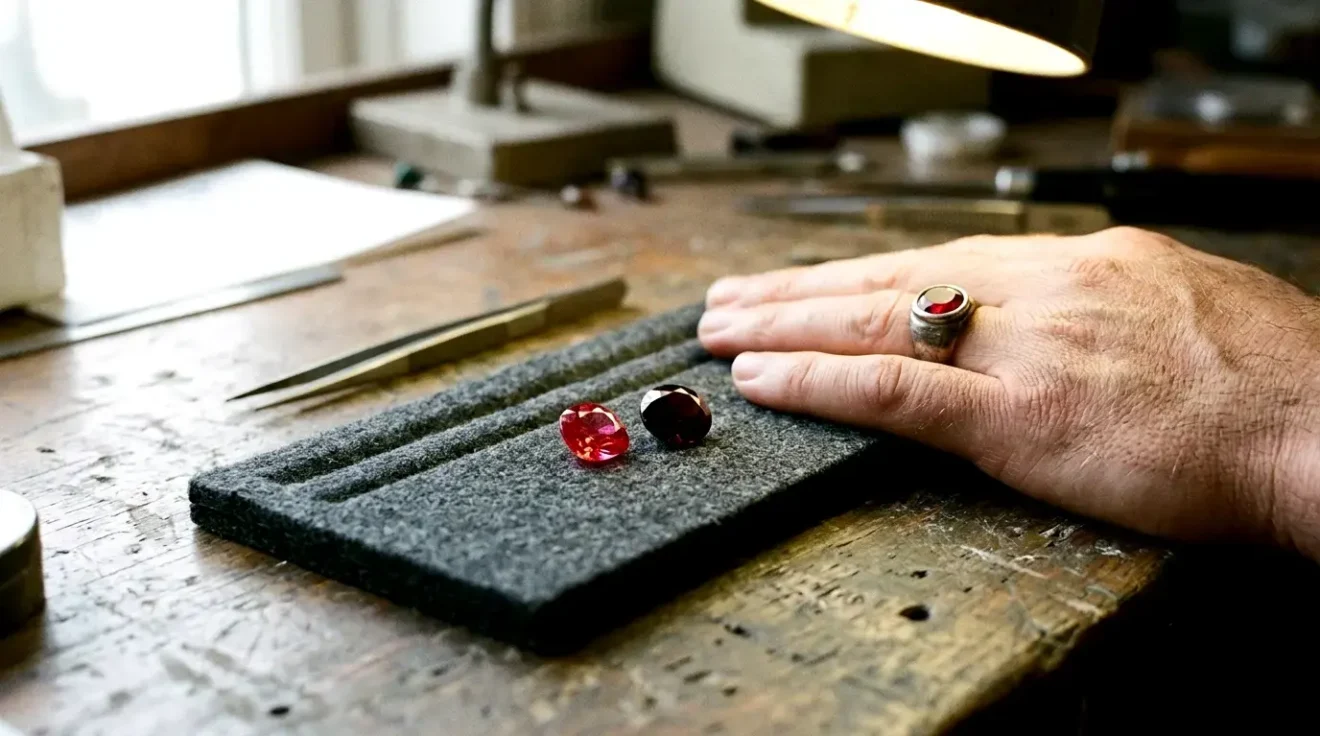
Colour is another reason to compare individual stones rather than names alone. Spinel offers vivid reds, pinks and blues. Garnet includes deep red almandine, pinkish-purple rhodolite and green tsavorite. These varieties differ in appearance, availability and price.
For a busy wearer, the setting may be the deciding factor. A bezel surrounds the stone’s perimeter with metal, reducing exposure of its edge. Well-designed claws can also provide security, although they leave more of the stone exposed. Lower settings generally catch fewer objects than high-profile designs.
| Criterion | Spinel | Garnet |
|---|---|---|
| Mohs hardness | 8 | 6.5–7.5, depending on variety |
| Toughness | Good | Fair to good |
| Cleavage | No distinct cleavage | No distinct cleavage |
| Routine stability | Generally good; avoid high heat | Generally good; avoid rough wear |
| Cleaning | Warm soapy water; treatment-dependent precautions | Warm soapy water; avoid steam |
| Best practical fit | Frequent wear with moderate exposure | Frequent wear with suitable variety and protection |
The GIA’s garnet hardness and cleaning reference confirms the variation across garnets and recommends avoiding hard blows and rough wear.
Neither stone is automatically inexpensive. Colour, quality, size and market availability influence price, so a universal price-performance ranking would be misleading. Treatment disclosure also matters: fracture filling is possible, though described as rare in both groups, and can change cleaning requirements.
Repolishing or recutting may be technically possible after damage, but feasibility depends on stone size, fracture location, setting and the amount of material that would be lost. For small stones, repair costs may outweigh the benefit.
Spinel offers the more forgiving starting point for many busy wearers. Garnet remains a credible choice when its variety, condition and mounting suit the owner’s actual routine.
The Cleaning Mistake That Ruins Porous Gemstones in Under 24 Hours
The dangerous cleaning mistake is treating every gemstone like a durable, untreated diamond. Ultrasonic vibration, steam, sudden temperature changes and aggressive household chemicals can damage sensitive, porous or treated materials in a single session. The damage may become visible immediately or later; 24 hours is not a universal threshold or a guaranteed outcome.
Different materials fail for different reasons. Porous gemstones and organic gem materials may absorb liquids or react to cleaning agents. Fracture-filled stones can contain substances with different chemical or thermal properties from the host gemstone. Rapid temperature changes can also create stress in susceptible materials.
Opal, turquoise and pearl deserve particular caution, but they should not be treated as physically identical. Their compositions, treatments and vulnerabilities differ. A dyed or stabilised gemstone may require different care from an untreated example of the same material.
Amethyst illustrates why blanket advice is misleading. Ordinary amethyst is not inherently a porous gemstone simply because it is marketed as semi-precious. Warm soapy water is generally suitable, while steam is not recommended and ultrasonic cleaning requires additional caution for dyed or fracture-filled specimens.
A practical cleaning classification is more useful than one universal method:
| Care category | Examples | Recommended approach |
|---|---|---|
| Gentle washing generally suitable | Untreated spinel, garnet and amethyst in sound settings | Brief cleaning with mild soap and lukewarm water, followed by careful drying |
| Damp cloth preferred | Turquoise, pearls, delicate treated stones | Use a soft, lightly dampened cloth and avoid soaking |
| Professional assessment first | Unknown fracture filling, unstable coatings, loose or damaged settings | Do not experiment with immersion, steam or ultrasonic equipment |
Even a gemstone that tolerates water may be mounted alongside materials that do not. Adhesives, mixed gemstones and existing damage can change the safety of a cleaning method.
Before using an ultrasonic machine, identify the stone, check for treatments and inspect the setting. Never assume a jewellery-cleaning product is suitable merely because it is sold for rings.
When identification or treatment history is uncertain, a soft cloth and professional advice are safer than experimenting. Preventing chemical or thermal damage is often easier than repairing it.
When Should You Re-Polish or Re-Tip Claws to Prevent Losing a Semi-Precious Stone?
Have a ring inspected when its claws appear thin, bent or displaced, or when the gemstone moves in its setting. Re-tipping restores worn metal before it fails; repolishing addresses surface wear but does not secure a loose stone. The right inspection interval depends on wearing frequency, impacts and the setting’s condition.
Claws are small structural components exposed to repeated contact. Over time, their tips can wear down or shift. A gemstone that begins rotating, rocking or making a faint rattling sound needs professional attention rather than continued wear.
A visual check under good light can reveal obvious problems. Compare the claws for symmetry, look for gaps between metal and stone, and notice whether the ring has begun catching on clothing.
Some people use a fingernail to notice an irregular claw edge, but this is not a reliable test of remaining metal thickness. Do not press, lift or bend a claw yourself. A jeweller should determine whether it needs tightening, rebuilding or replacement.
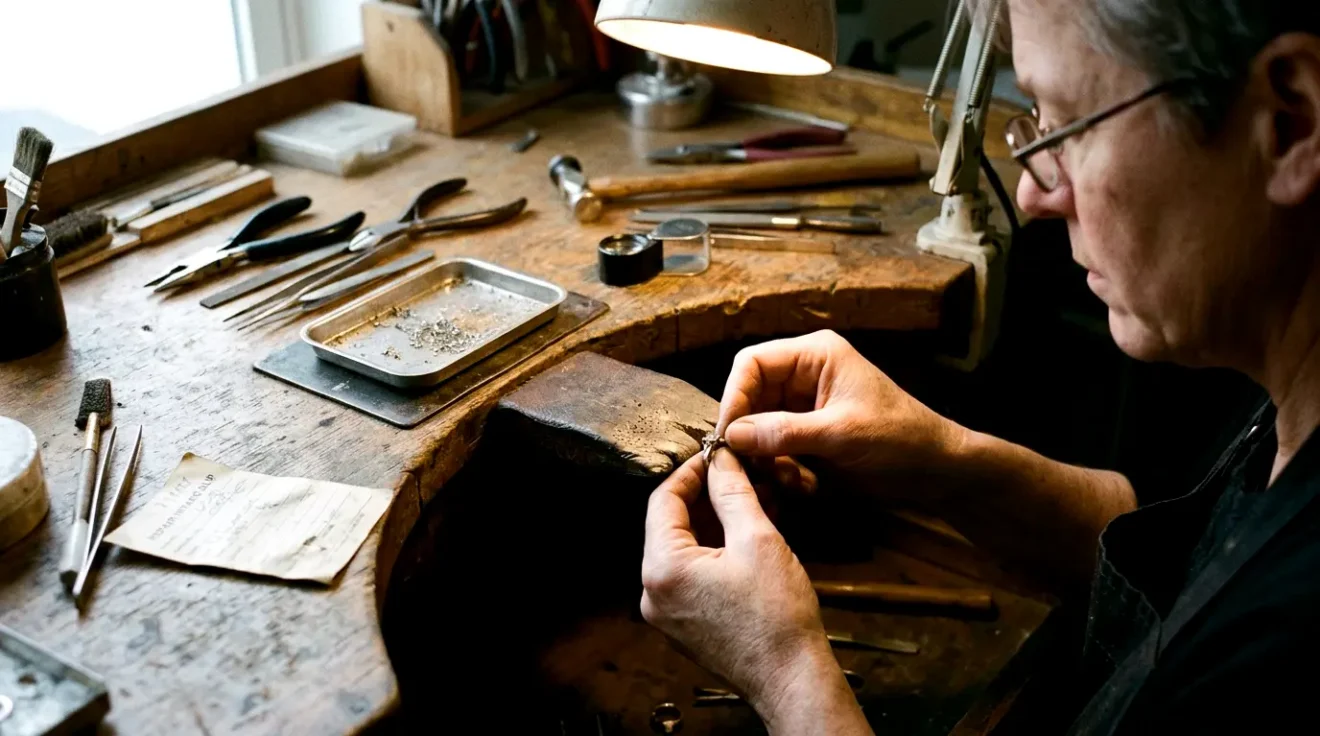
For someone wearing a ring most days, a professional inspection every six to twelve months can serve as a practical starting routine, with earlier checks after a significant knock or suspected movement. This is a precautionary schedule, not a universal gemological standard.
Repolishing is a separate decision. It removes a small amount of gemstone material to restore the surface, and repeated polishing can alter facet geometry, size or appearance. Not every scratch warrants intervention.
If a ring needs frequent repolishing, investigate why. A high setting, exposed corners or daily contact with abrasive materials may be the underlying problem.
Preventive maintenance also protects against the inconvenience of finding a replacement stone. Matching a particular colour, cut and size can be difficult, especially when a gemstone was selected individually.
A sound setting is the foundation of long-term wear. Even a durable gemstone becomes vulnerable when the metal holding it has deteriorated.
The Everyday-Wear Mistake That Makes Amethyst Look Worn Out in 6 Months
The main mistake is wearing an exposed amethyst ring through repeated abrasive activities without adjusting your habits. Amethyst has Mohs hardness 7 Mohs and good toughness, but its surface can still abrade. Some specimens may also fade after prolonged intense light exposure. Six months is a possible scenario, not an established wear deadline.
Amethyst is purple quartz, and quartz is common in everyday environments. Contact with abrasive particles can gradually affect polished surfaces, especially exposed facet junctions.
Gym equipment, gritty work surfaces and repeated knocks present more obvious risks than ordinary typing. A high-set amethyst ring is especially likely to encounter objects before the rest of the finger does.
Two different problems can make amethyst look tired. The first is surface deterioration: abrasions scatter light and reduce crisp reflections. The second is colour change, which may occur in susceptible stones after prolonged exposure to intense light.
The GIA’s amethyst care and cleaning recommendations identify abrasion, abrupt temperature changes and prolonged intense light as relevant concerns. They do not establish that normal office lighting causes rapid fading or that ordinary warm-water handwashing damages every amethyst.
That distinction matters when deciding whether the ring can be restored. Surface dirt can often be removed through appropriate cleaning. Professional repolishing may improve genuine surface abrasion, provided enough material remains and the stone can be worked safely. Faded colour cannot reliably be restored by polishing.
To reduce exposure, remove an amethyst ring before weight training, abrasive cleaning or work involving repeated impacts. Avoid leaving it in prolonged intense sunlight or exposing it to sudden temperature changes.
A bezel or another protective mounting can reduce vulnerable edge exposure. Wearing the ring on the less active hand may also help, although neither measure eliminates wear.
For someone unwilling to remove rings during demanding activities, amethyst may be a better choice for earrings or a pendant. Its colour and beauty remain appealing; the concern is the mismatch between the stone and the intended use.
Amethyst can be worn regularly with appropriate precautions. The better decision is to acknowledge those precautions before purchasing rather than discover them after the ring begins to show wear.
Smaller Clean Stone vs Larger Included Stone: Which Is Safer for a Ring You Won’t Baby?
A smaller, structurally sound gemstone in a protective setting is usually the safer choice for a ring that will see frequent knocks. Large stones often have more exposed surface and may sit higher. However, size alone does not determine durability, and not every inclusion weakens a gemstone. The inclusion’s type and position matter.
An inclusion is any internal feature within a gemstone. Some are harmless to practical wear, while fractures, cavities or other discontinuities can create vulnerable areas.
A fracture reaching the surface or girdle deserves particular attention. The girdle is the stone’s perimeter, where setting pressure and accidental impacts may be concentrated. A fracture near a vulnerable edge can influence how the gemstone responds to stress.
By contrast, a small inclusion fully enclosed within otherwise sound material may have little practical significance. A visually flawless stone is not automatically immune to chipping, either.
The size trade-off becomes more important when the setting changes with the stone. A larger gem may require a taller mounting or extend farther beyond protective metal. That increases opportunities for contact with furniture, equipment and door frames.
Consider a hypothetical comparison between two rings of the same gemstone variety. One holds a modest stone in a low bezel. The other holds a substantially larger stone with an exposed girdle and a visible surface-reaching fracture. For a wearer who frequently knocks their hands, the first design offers the more conservative risk profile.
Before buying, examine the stone under magnification and ask the seller to identify visible fractures or cavities. Check whether inclusions intersect the surface or girdle. Request disclosure of fracture filling, since filling materials may alter cleaning and repair considerations.
For long-term value, the question is not simply which gemstone provides more carats for the money. It is which combination of sound material, cut and setting is likely to remain attractive and secure under your routine.
A well-protected smaller stone can offer greater practical satisfaction than a larger one that demands constant caution. The next consideration is how that stone’s colour behaves in the lighting where it will actually be worn.
Key takeaways before choosing a purple gemstone
- Test colour in realistic lighting: a gemstone’s showroom appearance may differ from its appearance at home or work.
- Evaluate cut and colour together: strong saturation cannot fully compensate for poor light return or excessive darkness.
- Keep durability in the decision: a beautiful amethyst still needs an appropriate setting and realistic wearing habits.
Which Amethyst Should You Choose If You Want Strong Purple Without It Looking Brown Indoors?
Choose an amethyst that maintains an appealing, clearly purple appearance under both neutral and warm indoor lighting. Prioritise balanced saturation, attractive cutting and enough brightness to reveal the colour. Avoid judging a stone exclusively under intense showroom spotlights, which can make a gem look more vivid than it does in everyday surroundings.
Amethyst colour varies in saturation, tone and secondary hues. Some stones appear distinctly violet or reddish-purple, while others show greyish, brownish or uneven areas under particular lighting conditions.
Lighting changes the wavelengths available for the gemstone to transmit and reflect. Warm indoor lamps and daylight-equivalent lighting have different spectral characteristics, so a stone’s apparent colour can change even when the material itself remains unchanged.
Cutting also influences appearance. A very deep stone may look dark in certain viewing conditions, while poorly proportioned facets can create areas where light escapes instead of returning to the viewer.
The trade description “Deep Siberian” is sometimes used for highly saturated purple amethyst, often associated with desirable reddish or bluish nuances. It is a commercial colour description, not a guarantee of geographic origin, treatment status or performance under indoor lighting.
When evaluating a stone, ask to see it away from concentrated display lights. Compare its appearance under neutral white illumination and the warmer lighting typical of your home or workplace. Rotate it gently to look for dark areas, distracting colour zoning or a washed-out appearance.
Treatment history deserves attention as well. Heating can alter amethyst colour, but the outcome depends on the material and conditions. It should not be assumed that heating reliably removes every unwanted brownish appearance or improves every specimen. Ask for treatment disclosure rather than treating an attractive colour as proof of an untreated origin.
Untreated amethyst can provide a useful reference when comparing natural colour, but treatment status alone does not establish that one stone will look better indoors. The actual appearance under realistic illumination remains decisive.
For a ring worn mostly at a desk or during evenings at home, colour performance in those environments may matter more than exceptional brilliance under a jeweller’s spotlights.
Compare two or three amethysts in the lighting you encounter most often, then choose the best combination of colour, cut, soundness and protective setting. If frequent impacts are unavoidable, consider whether a purple spinel better suits your routine.
Can you wear a semi-precious gemstone ring every day?
Yes, provided the gemstone, setting and wearing habits are compatible. Spinel is particularly suitable for frequent wear, while garnet and amethyst can also work with appropriate precautions. Remove gemstone rings before activities involving substantial impacts, abrasive contact or potentially damaging chemicals.
Is a bezel setting always safer than claws?
A well-made bezel generally provides more continuous protection around a gemstone’s edge, but safety also depends on workmanship, stone shape and overall design. A properly maintained claw setting can be secure. Neither design makes a gemstone immune to damage.
Does a higher Mohs hardness mean a gemstone will never chip?
No. Mohs hardness measures scratch resistance, while toughness describes resistance to breaking and chipping. A hard gemstone may still fracture after a sufficiently concentrated impact, particularly at exposed edges or structurally vulnerable areas.
Should you remove gemstone rings before using hand sanitiser?
Removing a ring before exposure to unfamiliar cleaning products is a conservative choice, particularly when the gemstone is porous, treated or mounted with sensitive materials. The actual risk depends on the formulation, gemstone and setting. Avoid assuming that every sanitiser damages every stone.
Can a scratched gemstone be made to look new again?
Some surface scratches can be reduced through professional repolishing, but the process removes material and may require recutting. Deep fractures, chips and colour fading cannot necessarily be corrected. A jeweller or qualified gem specialist should assess whether repair is worthwhile before work begins.