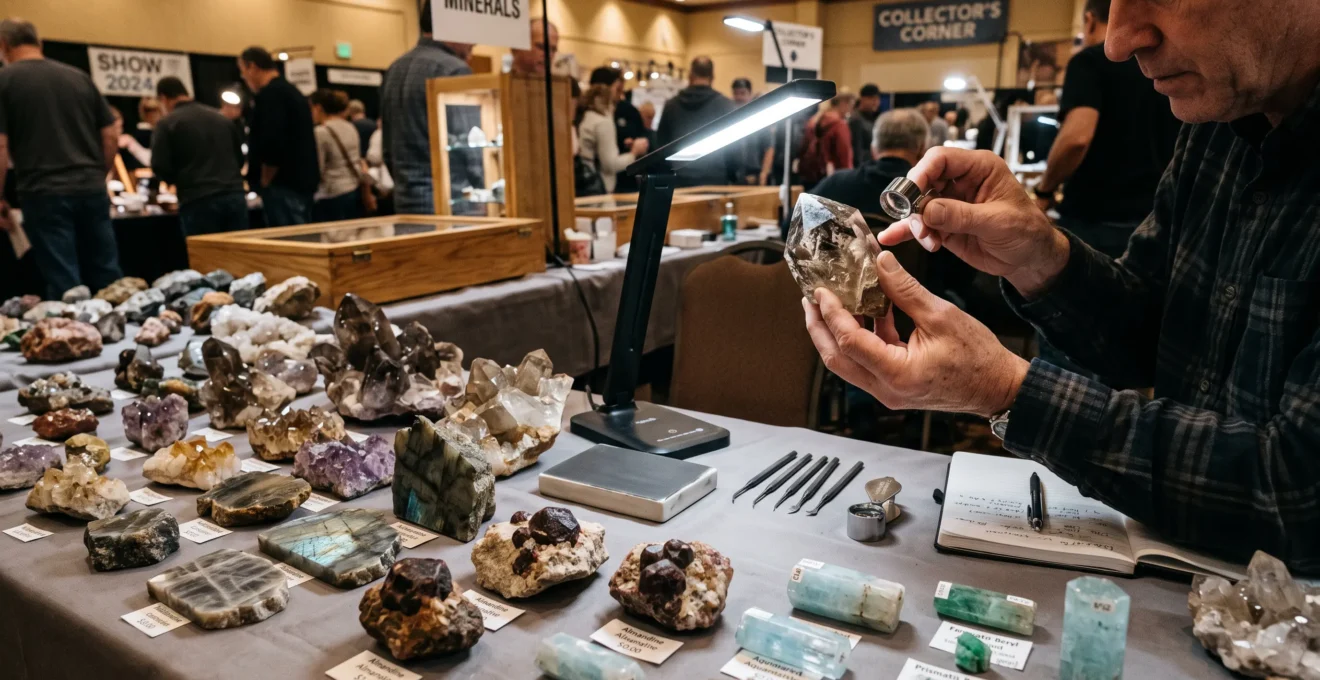
A stone can withstand a scratch test yet break unexpectedly against a grinding wheel. Another may look delicate but survive years of handling without developing a visible chip. The difference often begins inside the crystal, where atomic arrangements determine whether the mineral has preferred directions of breakage.
Identifying a gemstone’s silicate group provides a practical starting point for predicting cleavage, hardness, likely fracture behavior, and suitable cleaning methods. Quartz, feldspar, garnet, beryl, and pyroxene all contain silicon and oxygen, but their crystal structures and mechanical properties differ substantially.
For collectors and beginner lapidaries, the useful question is not simply whether a stone is a silicate. It is which mineral family the specimen belongs to, whether that family exhibits strong cleavage, and whether the individual stone contains fractures or alterations that increase its vulnerability.
Classification will not give an exact probability of chipping. It can, however, identify preventable risks before purchasing rough, shaping a cabochon, or cleaning a finished specimen.
Silicate identification: the practical essentials
- Crystal structure matters: quartz has no cleavage, whereas feldspars and pyroxenes have preferred breakage directions that require attention during cutting.
- Hardness is not toughness: a mineral that resists scratching may still chip or split when force acts along a cleavage plane.
- Identify before intervening: examine habit, cleavage, surface condition, and available identification evidence before buying, cutting, or cleaning an unfamiliar stone.
- Why Are Most Gem Minerals Silicates, and Why Does That Matter for What You’ll Find at Shows?
- How to Narrow a Stone to a Silicate Subgroup Using Streak, Habit, and One Hardness Test?
- Feldspar vs Pyroxene: Which Is Less Likely to Surprise-Fragment During Cabochon Cutting?
- The Misidentification That Makes People Clean Silicates the Wrong Way and Cause Clouding
- When Should You Identify the Silicate Group: Before Buying Rough or After Your First Cut Face?
- How to Tell Amethyst, Citrine, and Smoky Quartz Apart Using 3 Simple Checks?
- The Misidentification That Fuels Wrong Cleaning Habits — How Wrong Silicate Labels Lead to Clouding (Risk and Correction)
- Which Macrocrystalline Quartz Variety Is This, and What’s the Fastest Way to Confirm?
Why Are Most Gem Minerals Silicates, and Why Does That Matter for What You’ll Find at Shows?
Silicates occupy a major place in gemstone collecting because many familiar gem minerals belong to this extensive mineral class. Their shared silicon–oxygen building blocks form different crystal structures, producing materials with contrasting hardness, cleavage, and fracture behavior. At a mineral show, identifying these families helps buyers distinguish common collecting material from potentially fragile or specialized cutting rough.
The fundamental unit is the silicon–oxygen tetrahedron, consisting of one silicon atom surrounded by four oxygen atoms. These tetrahedra may remain isolated or connect into chains, rings, sheets, and three-dimensional frameworks. The Geosciences LibreTexts chapter on silicate minerals explains these structural arrangements and their role in mineral classification.
Not every family is defined by a unique tetrahedral arrangement. Quartz and feldspar, for example, are both framework silicates, yet they behave differently because their complete crystal structures differ. Structural classification is therefore an identification framework rather than a universal toughness ranking.
At a dealer’s table, the following mineral-family reference gives a more useful starting point than assuming all silicates behave alike.
| Mineral family | Common gem examples | Structural classification | Practical consideration |
|---|---|---|---|
| Quartz | Amethyst, citrine, smoky quartz | Framework silicate | No cleavage; existing fractures still matter |
| Feldspar | Moonstone, labradorite, sunstone | Framework silicate | Cleavage makes impacts and orientation important |
| Garnet | Almandine, grossular | Isolated-tetrahedra silicate | No distinct cleavage; inspect fractures |
| Beryl | Emerald, aquamarine | Ring silicate | Limited cleavage; inclusions and treatments affect practical care |
| Pyroxene | Diopside, enstatite | Single-chain silicate | Two cleavage directions require cutting precautions |
| Olivine | Peridot | Isolated-tetrahedra silicate | Inspect fractures and avoid unnecessary impact |
| Topaz | Blue topaz, imperial topaz | Silicate with isolated SiO4 units | Perfect basal cleavage despite high hardness |
| Zircon | Blue zircon, golden zircon | Isolated-tetrahedra silicate | Brittleness and edge abrasion deserve attention |
Silicate classification does not cover every gemstone. Ruby and sapphire belong to corundum, an oxide mineral; spinel is also an oxide; and calcite is a carbonate. These exceptions demonstrate why mineral identification must precede assumptions about hardness or cleaning tolerance.
Availability and pricing add another distinction. Quartz varieties are widely represented in the gem trade, while specific high-quality colors, exceptional crystals, and particular rough materials can command substantially different values. The supplied references do not establish comparative show inventories or reliable price tiers for every family, so subgroup membership alone should not be used to estimate a specimen’s market value.
Once the likely family is known, the next task is to narrow the identification without damaging the material being evaluated.
How to Narrow a Stone to a Silicate Subgroup Using Streak, Habit, and One Hardness Test?
Start by examining crystal habit and any visible cleavage, then use streak testing on suitable unpolished material and hardness testing only when necessary and permitted. These observations can narrow the possibilities, but none reliably identifies every silicate group on its own. A single scratch test is most useful for excluding candidates rather than providing a final identification.
Crystal habit is an important initial clue. Garnets may form recognizable equant crystals with dodecahedral faces. Beryl commonly forms hexagonal prisms, while some pyroxenes show shorter prismatic habits. Feldspar specimens may present blocky shapes and conspicuous flat surfaces associated with cleavage.
Habit becomes less useful when the stone is a rounded pebble, heavily weathered, or polished into a cabochon. In such situations, careful observation under a loupe may reveal features that the overall outline conceals.
The streak test examines the color of a mineral in powdered form. According to the Geology.com explanation of the mineral streak test, a conventional unglazed porcelain plate has a hardness of approximately 6.5–7. Minerals harder than the plate may scratch its surface rather than leave a diagnostic powder streak.
Feldspars commonly give white streaks, whereas some pyroxenes produce white, grayish, or faintly greenish results. Harder minerals such as quartz, garnet, and beryl often fail to produce a usable streak on a conventional plate. These overlapping outcomes make streak a supporting observation, not a decisive classification tool.
When examining expendable rough, the following hardness comparisons provide a useful preliminary filter. A test should distinguish an actual scratch from a removable powder mark.
| Reference hardness | Possible observation | Interpretation and limitation |
|---|---|---|
| 5.5 | Specimen resists a reference point | Compatible with several common silicates; not diagnostic |
| 6 | Specimen scratches or is scratched by a reference point | May help separate softer pyroxenes from harder quartz, but feldspar and pyroxene ranges overlap |
| 7 | Specimen is scratched by a calibrated reference | May exclude harder candidates such as typical beryl; cannot reliably separate every garnet from every beryl |
Quartz has 7 Mohs hardness; feldspars commonly fall around 6–6.5, pyroxenes vary by species, and both garnet and beryl cover ranges that overlap other minerals. Consequently, a fixed three-test sequence cannot conclusively separate all these families.
Weathered surfaces may respond differently from fresh mineral material. Coatings can conceal color and habit, while aggregates may combine several minerals with different properties. Finished stones should not be subjected to destructive streak or scratch testing. For valuable material, optical examination, measured specific gravity, refractive-index testing where applicable, or professional gemological assessment are better choices.
After identification narrows the possibilities to cleavage-bearing families, the way those internal weaknesses interact with a cutting wheel becomes the more important question.
Feldspar vs Pyroxene: Which Is Less Likely to Surprise-Fragment During Cabochon Cutting?
Neither feldspar nor pyroxene is automatically safe from unexpected fragmentation during cabochon cutting. Both contain two prominent cleavage directions, so fracture risk depends on the specific mineral, existing cracks, orientation, and cutting conditions. Feldspar’s cleavage is particularly important in materials such as moonstone, while pyroxene requires similar attention to directional breakage.
Feldspars have two characteristic cleavage directions that intersect at or near right angles, depending on the mineral. Pyroxenes also typically have two cleavages intersecting at approximately 90 degrees, with their exact geometry differing from feldspar.
These planes represent crystallographic directions along which separation is favored. They do not guarantee that a stone will break during cutting, but they explain why apparent surface hardness alone cannot predict how a specimen will respond to pressure.
Moonstone offers a documented example. The GIA Moonstone Care and Cleaning Guide identifies its hardness as 6–6.5 Mohs hardness, describes its toughness as poor, and emphasizes its two cleavage directions. The same reference warns that high heat or sudden temperature changes can cause fracture.
During cabochon shaping, a cutter should therefore inspect any flat reflective planes before selecting the dome direction. A cleavage plane that approaches a thin edge or intersects an existing crack deserves particular attention because the edge may be mechanically vulnerable.
For moonstone, labradorite, and sunstone, orientation must also account for the optical effect the cutter wants to preserve. The most attractive face for adularescence or labradorescence is not necessarily the mechanically safest orientation. A practical decision may involve compromising between the visual effect, the rough’s shape, and the location of existing weaknesses.
Diopside and enstatite present different mineral compositions and may exhibit their own cracking or chipping behavior. However, the supplied references do not establish that pyroxenes preferentially chip at the girdle while feldspars preferentially split during shaping. Those tendencies should not be treated as experimentally demonstrated cutting rules.
Gentle contact, sound coolant delivery, and frequent examination are sensible precautions for either family. The exact pressure or cooling interval cannot be standardized from the available evidence. Heating during dopping and polishing should also be controlled with care, particularly when the stone already shows cracks or unknown treatments.
Five checks before cutting cleavage-bearing rough
- Identify the probable mineral family and record it on the rough’s identification label.
- Inspect all accessible surfaces with a loupe and mark visible cleavage traces or cracks on a sketch.
- Compare possible dome orientations and draw the preferred outline on the rough.
- Record the planned cutting approach, including how cooling and excessive localized force will be avoided.
- Reinspect the preform after initial shaping and document any newly exposed weakness before proceeding.
Cutting risk is only one consequence of mineral misidentification. The same error can lead collectors to choose cleaning methods inappropriate for a stone’s actual structure and condition.
The Misidentification That Makes People Clean Silicates the Wrong Way and Cause Clouding
A damaging cleaning mistake is treating an unidentified silicate as though it were ordinary, untreated quartz. Some feldspars, fractured gems, and treated materials require more conservative care than their appearance suggests. Ultrasonic vibration, steam, abrupt temperature changes, or unsuitable chemicals can damage vulnerable stones, although a cloudy appearance alone does not establish which process caused the change.
Quartz and feldspar can resemble one another when they occur as pale, translucent, or polished materials. Yet quartz lacks cleavage, whereas feldspar has preferred planes of breakage. That difference affects their responses to mechanical stress and makes identification particularly important before using equipment that introduces vibration or heat.
Moonstone is a clear example of a mineral for which the cleaning recommendation is specific: GIA recommends warm, soapy water and advises against ultrasonic and steam cleaning. Its documented cleavage and poor toughness justify a more cautious approach than hardness alone might suggest.
Cleaning-related cloudiness can have several explanations. Surface residue may leave a removable haze; abrasion can dull a polish; cracks may become more visible after treatment; and damage to coatings or fracture fillings may change the appearance of a specimen. The supplied evidence does not establish that cleaning liquids routinely penetrate feldspar cleavage networks and cause permanent clouding.
A safe preliminary inspection should focus on the stone’s identity and condition without introducing additional damage.
- Check the seller’s identification and treatment information, if available.
- Inspect the surface under good lighting for cracks, coatings, or suspicious changes in luster.
- Look for visible cleavage rather than relying only on color or transparency.
- Avoid destructive hardness testing on finished specimens.
- When identity or treatment remains uncertain, defer mechanical or heat-based cleaning and seek appropriate gemological guidance.
Dyed, coated, or fracture-filled materials introduce a separate uncertainty. A cleaning method suitable for an untreated mineral may still affect a surface treatment. Likewise, an opal lookalike should not be assigned quartz-like cleaning tolerance merely because it resembles a pale quartz specimen.
Warm, mild soapy water can be an appropriate starting method for known, untreated quartz and documented moonstone, but even this method should not be assumed safe for every treated or composite item. A seller’s treatment disclosure can matter more than the broad mineral-group label.
Preventing damage starts earlier than cleaning: the decision to verify a stone before purchase can determine whether its vulnerabilities are recognized before any intervention.
When Should You Identify the Silicate Group: Before Buying Rough or After Your First Cut Face?
Identify the likely silicate family before buying rough whenever the purchase or cutting risk is meaningful. A fresh cut face can provide additional evidence, but it should confirm or refine an earlier assessment rather than replace every pre-purchase check. The best approach combines non-destructive examination before purchase with more detailed identification when the stone can safely be examined further.
Before purchasing, inspect visible crystal form, cleavage, fracture surfaces, luster, and the seller’s description. Streak and hardness testing should only be considered for suitable expendable rough when the seller permits them. Valuable crystals, finished stones, and specimens with fragile surfaces should not be damaged simply to obtain a provisional identification.
Pre-purchase assessment is especially important when the intended use involves a thin cabochon, an impact-exposed setting, or a material whose cutting behavior is unfamiliar. These circumstances make an incorrect classification potentially costly even without assigning a universal price threshold.
A first cut face may reveal observations hidden by weathering or surface coatings. Fresh material can show internal color, inclusions, fractures, and possible cleavage traces more clearly. However, a saw-cut plane is an artificial surface; it does not automatically reveal a true crystallographic cleavage plane.
Consider a hypothetical buyer examining a pale rough stone labeled as quartz. The surface is weathered, with little visible crystal form. Instead of buying it solely on the label, the buyer requests available identification information and examines the specimen for cleavage. If the stone is later cut, its fresh surface provides further evidence for reassessing the original identification.
The example illustrates a two-stage approach rather than a validated field identification procedure. It also shows why cutting a diagnostic window can be useful without guaranteeing a definitive answer.
A portable scratch kit can be worthwhile for collectors who routinely handle inexpensive, unpolished specimens and have permission to test them. No reliable monetary cutoff is established by the supplied sources. For expensive rough, the potential loss associated with incorrect identification may justify independent gemological testing instead of destructive field experiments.
If a purchase depends on a claimed mineral identity or treatment status, obtain any return or verification agreement before paying. A seller’s willingness to accept a return after cutting must never be assumed; cutting commonly changes the condition of the material.
Once quartz has been established as the mineral, identification becomes more focused: the remaining question may concern its color variety and whether that color is natural or treated.
How to Tell Amethyst, Citrine, and Smoky Quartz Apart Using 3 Simple Checks?
Amethyst, citrine, and smoky quartz are color varieties of the same mineral: quartz. Amethyst is purple, citrine ranges from yellow to orange and brownish-orange, and smoky quartz displays gray to brown or darker smoky coloration. Three visual checks—color distribution, appearance under consistent lighting, and transparency—can help classify the variety, but cannot reliably determine treatment history.
The first check is color zoning. Examine the stone under transmitted or strong neutral light where its transparency permits. Amethyst may show uneven purple coloration or angular growth-related zoning. Such patterns can support an identification, but zoning is neither universal in amethyst nor conclusive evidence of natural origin.
The second check is the character of the body color under controlled lighting. Citrine generally shows yellow to orange hues, while smoky quartz is characterized by gray or brown coloration. Comparing appearance under daylight and warm artificial light can help document a borderline color description, but a change in lighting is not an established test for separating natural citrine from heated amethyst.
The third check is transparency and color depth. Light-colored smoky quartz may resemble other brownish quartz specimens; dark smoky quartz may obscure internal features. Strongly saturated amethyst and intensely colored citrine can also appear different according to thickness and illumination.
| Check | Useful observation | Important limitation |
|---|---|---|
| Color zoning | Observe purple, yellow, or smoky growth-related color distribution | Zoning does not establish treatment history |
| Lighting comparison | Describe the dominant body color under consistent illumination | Lighting can alter perceived color without identifying its origin |
| Color depth and transparency | Compare how color changes across thick and thin areas | Darkness and transparency alone do not prove a particular variety or treatment |
Treatment is the major complication. The GIA citrine buyer’s guide explains that natural yellow quartz is rare and that most commercial citrine results from heating amethyst. This means a specimen’s yellow appearance cannot establish whether its color developed naturally.
Smoky quartz coloration can also be associated with irradiation. Visual appearance alone cannot reliably distinguish naturally colored specimens from artificially irradiated material. Claims of natural color should therefore be supported by appropriate provenance or testing rather than by supposedly diagnostic patterns of color uniformity.
For practical durability, the common mineral identity matters more than the variety name. These stones share the basic hardness and cleavage characteristics of macrocrystalline quartz. Nevertheless, fractures, inclusions, and treatments can produce differences between individual specimens.
This distinction between shared mineral structure and variable treatment history is especially useful when cleaning damage leads an owner to question whether the stone was correctly labeled in the first place.
The Misidentification That Fuels Wrong Cleaning Habits — How Wrong Silicate Labels Lead to Clouding (Risk and Correction)
When a silicate becomes cloudy or dull after cleaning, the first step is to distinguish removable surface contamination from damage to the polish, internal fractures, or treatments. A wrong mineral label may have contributed to the cleaning choice, but it does not prove the cause of deterioration. Recovery depends on identifying the material and the actual mechanism of damage.
Begin with careful visual inspection rather than repeating the cleaning treatment. A haze confined to the outer surface may have a different explanation from a milky appearance distributed through internal fractures. Examination under reflected and transmitted light can help locate the visible change, although it may not determine its composition.
Mechanical abrasion can alter a polished surface, while cleavage-related fractures may extend into the stone. Surface repolishing may sometimes improve abrasion damage if sufficient sound material remains and the stone can be worked safely. It cannot simply erase deep internal fractures.
Re-oiling should not be presented as a routine restoration treatment for feldspars or jade-like materials. Such intervention is treatment-specific, may change disclosure obligations, and can conceal rather than repair underlying damage. The supplied references do not provide a verified re-oiling procedure for cleaning-damaged feldspar.
The practical comparison below distinguishes documented vulnerabilities from broader conditions that require individual assessment.
| Material | Relevant vulnerability | Practical cleaning approach |
|---|---|---|
| Moonstone and other identified feldspars | Cleavage and possible fractures; moonstone has documented poor toughness | For moonstone, warm soapy water; avoid ultrasonic and steam cleaning |
| Quartz varieties | Existing fractures, thermal shock, and possible treatments | Warm soapy water for suitable untreated material; check treatment status |
| Garnet | Fractures or inclusions in the individual specimen | Choose cleaning according to the identified species, condition, and treatments |
| Topaz | Perfect cleavage despite high hardness | Avoid impacts; verify appropriate cleaning guidance before using equipment |
| Serpentine and other soft silicate materials | Variable hardness, structure, and surface condition | Favor conservative handling until the exact material is known |
| Coated, dyed, or fracture-filled gemstones | Potential alteration of applied treatments | Follow treatment-specific guidance rather than assumptions based on mineral family |
For collectors, an incorrect label also creates a market problem. A specimen sold as quartz but actually belonging to a different mineral family may be valued, cleaned, or cut under inappropriate assumptions. Whether this results in resale loss depends on the actual material, documented damage, and buyer expectations; the available sources do not quantify those losses.
Before accepting a cleaning recommendation from a seller, ask for the mineral identification, any known treatments, and the care instructions applicable to that specific material. Where evidence is limited, preserve the original documentation and avoid interventions that could make later assessment more difficult.
The most useful long-term correction is accurate identification before damage occurs. Macrocrystalline quartz provides a convenient reference because its physical characteristics are familiar and distinguishable from many common lookalikes.
Key takeaways before confirming quartz
- A quartz identification should rest on mineral properties, not on purple, yellow, or smoky color alone.
- No cleavage and Mohs hardness near 7 are valuable clues, but neither excludes all possible lookalikes.
- Establish mineral identity first; describe the variety and investigate possible treatments afterward.
Which Macrocrystalline Quartz Variety Is This, and What’s the Fastest Way to Confirm?
The fastest preliminary approach is to establish that the stone is quartz using its hardness, lack of cleavage, and characteristic fracture, then classify the variety by color and inclusions. Amethyst, citrine, smoky quartz, rock crystal, rose quartz, and aventurine share the quartz mineral identity, but their appearances differ. No single field observation proves every identification conclusively.
Macrocrystalline quartz typically has Mohs hardness 7, lacks cleavage, and may exhibit conchoidal fracture. Its broken surfaces can be curved and shell-like rather than organized into repeated flat cleavage planes. These observations are particularly useful when distinguishing quartz from feldspar in appropriate rough specimens.
A hardness test near 7 is informative but should not be overinterpreted. Beryl, with typical hardness above quartz, can be distinguished in suitable circumstances, while feldspar is usually softer. However, natural variation, surface condition, testing technique, and overlapping properties mean that one or two scratches cannot rule out every lookalike.
Use the following variety guide only after the quartz identification is reasonably supported.
| Quartz variety | Main visual characteristic | Identification caution |
|---|---|---|
| Amethyst | Purple coloration | Purple fluorite and other minerals can resemble amethyst |
| Citrine | Yellow to orange or brownish-orange coloration | Color cannot establish natural versus heat-treated origin |
| Smoky quartz | Gray to smoky brown or darker coloration | Visual checks cannot reliably establish irradiation history |
| Rock crystal | Colorless and transparent | Glass and other transparent materials may resemble it |
| Rose quartz | Pink coloration, often translucent | Color alone does not distinguish quartz from all pink lookalikes |
| Aventurine | Quartz containing inclusions that may produce a sparkling effect | Appearance depends on the nature and distribution of inclusions |
Two common identification errors illustrate the limits of color. First, a purple specimen is not necessarily amethyst. Fluorite can also occur in purple and has substantially different hardness and cleavage characteristics. Some purple mica minerals may also resemble quartz-rich material in mixed specimens, although their sheet-like cleavage and softness provide additional clues.
Second, a smoky appearance does not establish natural coloration. Irradiation can affect quartz color, and visual inspection may not establish the treatment origin. Similarly, the yellow appearance of citrine cannot prove that its color developed without heating.
Quartz is a useful durability reference within the silicates because its hardness and lack of cleavage contrast with the cleavage-bearing feldspar and pyroxene families. Yet even sound quartz can chip at thin edges, break along existing fractures, or suffer damage from sudden temperature changes.
For the next rough stone or polished specimen, record the likely mineral family, visible fractures, cleavage evidence, and any known treatments before selecting a cutting or cleaning method. This short identification record is more useful than relying on a variety name alone.
Can a harder gemstone chip more easily than a softer one?
Yes. Hardness measures resistance to scratching, whereas toughness concerns resistance to breaking or chipping. Topaz, for example, has high hardness but perfect cleavage, so an impact in an unfavorable direction can still cause breakage. Individual fractures and inclusions also influence toughness.
Does every silicate mineral have cleavage?
No. Quartz and garnet have no cleavage, whereas feldspar and pyroxene have two characteristic cleavage directions. Topaz has perfect basal cleavage. These differences help explain why the word silicate alone cannot determine a gemstone’s resistance to impacts.
Can a white streak confirm that a specimen is feldspar?
No. Feldspars commonly produce white streaks, but several other minerals produce white or pale streaks as well. Crystal habit, cleavage, hardness, and other mineral properties must also be considered. Streak testing is inappropriate for valuable finished gemstones because it can damage them.
Should a cracked silicate always be rejected for cabochon cutting?
Not necessarily. The decision depends on the position and extent of the cracks, the mineral’s cleavage, the intended cabochon shape, and the amount of sound material available. Cracks crossing a thin edge or a proposed dome deserve particular caution. A visibly fractured specimen may be better retained as a collection piece.
Can a gem show label prove that a quartz specimen has natural color?
No. A seller’s label identifies a claim, not necessarily verified treatment history. Citrine may result from heating amethyst, and smoky quartz may be artificially irradiated. Where natural color materially affects a purchase decision, seek appropriate documentation or professional evaluation.